AC, DC, or BLDC: Which Motor to Choose for a Food Waste Disposer
When it comes to buying a food waste disposer, most
people focus on wattage, grinding chamber volume, or brand. Few stop to
consider what actually determines the appliance's service life, reliability,
and ease of use - the type of motor.
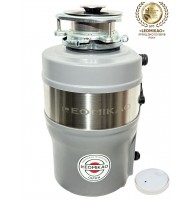
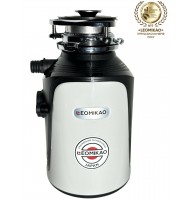
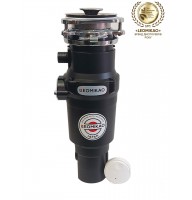
In this article, we'll break down three technologies used in modern disposers - the AC induction motor, the DC brushed motor, and the BLDC brushless motor. We'll look at their strengths and weaknesses, and explain why induction technology is at the heart of most LEOMIKAO models.
Why the Type of Motor Matters
at All
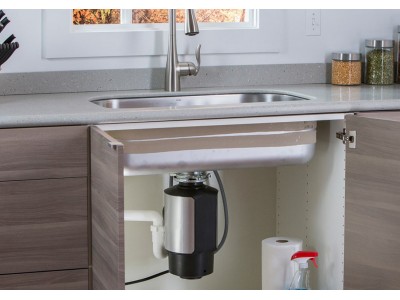
The motor is essentially the heart of any disposer.
It's what spins the grinding chamber with its impellers or grinding ring,
turning food scraps into a fine slurry that flows freely down the drain.
The technology used in the motor determines:
- Torque - the ability to handle bones, peels, stalks, and other hard
scraps;
- Service life - how many on/off cycles the unit can withstand without
losing performance;
- Noise and vibration level - how comfortable the appliance is to use
every day;
- Cost and power consumption - how the motor's price affects the
appliance's final cost and your electricity bill.
Let's take a closer look at each type.
AC - Induction Motor
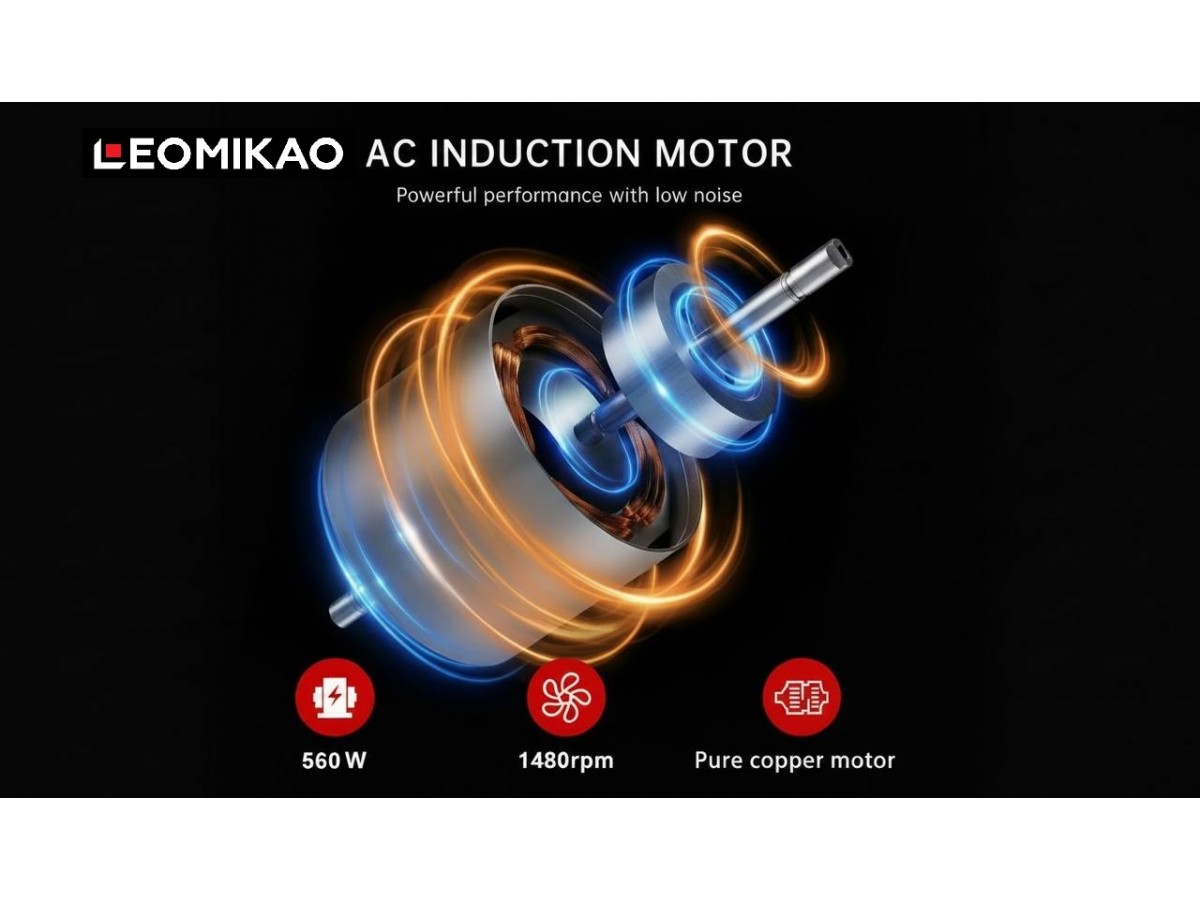
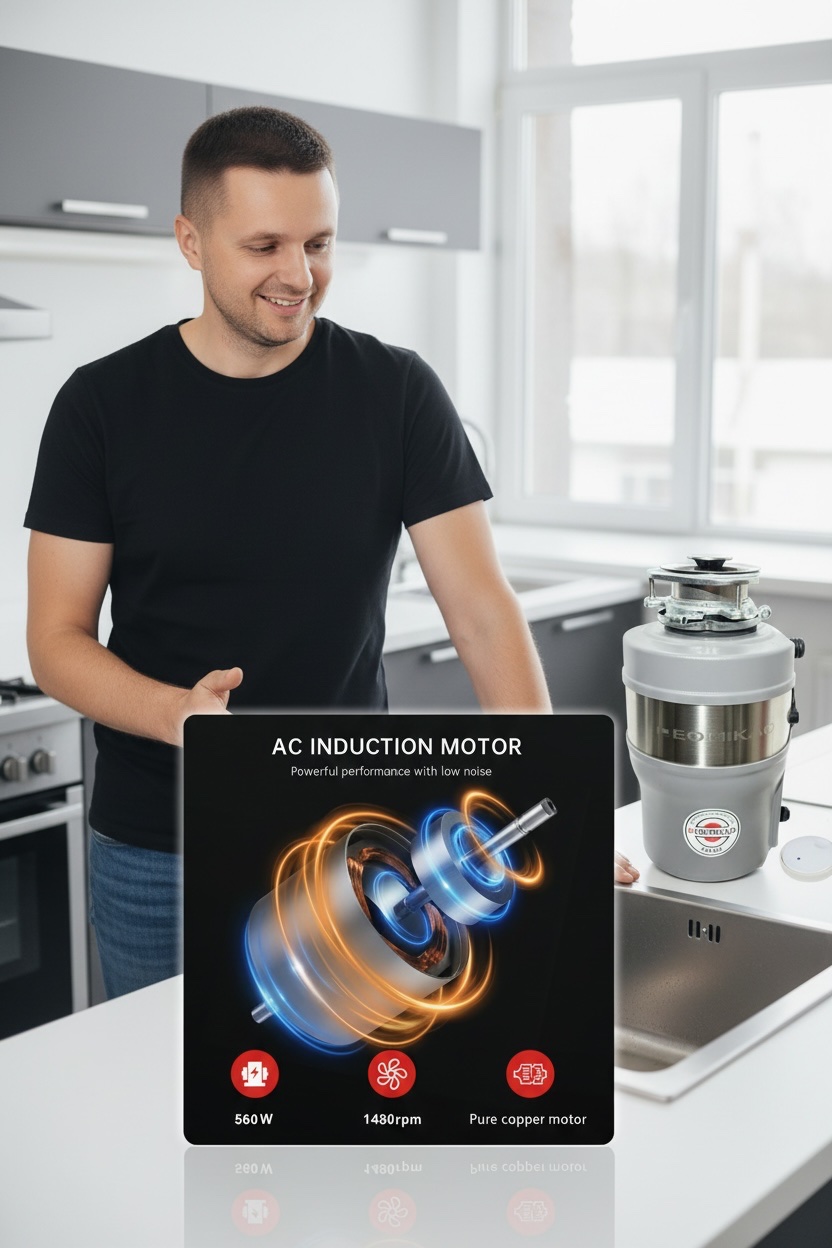
How it works. The motor runs directly on the standard 220V household mains. A rotating magnetic field in the stator drives the rotor without any physical contact — energy transfer happens through electromagnetic induction, so there are simply no brushes or commutator.
Strengths
|
Advantage |
What This Means in Practice |
|
Powerful torque |
Confidently grinds bones,
fibrous tissue, and hard vegetable scraps |
|
Exceptional reliability |
No brushes to wear out or
spark - lifespan reaches 10–15 years and beyond |
|
Simple design |
Fewer components - fewer
failure points, easier to repair |
|
Overload resistance |
If an object that's too
hard gets inside, thermal protection kicks in instead of burning out the
winding |
|
Tolerance to voltage
spikes |
Critically important where
the power grid is unstable |
|
Quiet operation |
A steady low-frequency
hum instead of a sharp high-pitched whine |
Weaknesses
- Larger size and weight compared to
DC counterparts;
- Slightly lower efficiency than
BLDC, though the difference in monthly power consumption is minimal (about
0.5–1 kWh);
- Fixed rotation speed (typically around 1400–1450 rpm) with no adjustment option.
DC - Brushed Motor
How it works.
Powered by a reduced voltage (12–24V) through a built-in power supply. Current
reaches the rotor through graphite brushes and a commutator.
Strengths
|
Advantage |
What This Means in Practice |
|
Compact
size |
The
motor is lighter and takes up less space |
|
High
rotation speed |
Up to 2500–3000 rpm - faster grinding |
|
Moderate
noise level |
Thanks
to low voltage and reduced vibration |
|
Higher efficiency than AC |
About
70–75% versus 55–60% |
|
Soft
start |
No
jolt on startup |
Weaknesses
- Brush wear - a consumable part
that typically needs replacement every 2–4 years of active use;
- Sparking during operation - an
undesirable factor in the damp environment under a sink;
- The power supply is sensitive to
voltage fluctuations in the mains;
- Shorter lifespan - averaging 5–8
years versus 10–15 for AC motors;
- Weaker torque at high speeds - handles hard scraps worse than AC.
BLDC - Brushless DC Motor
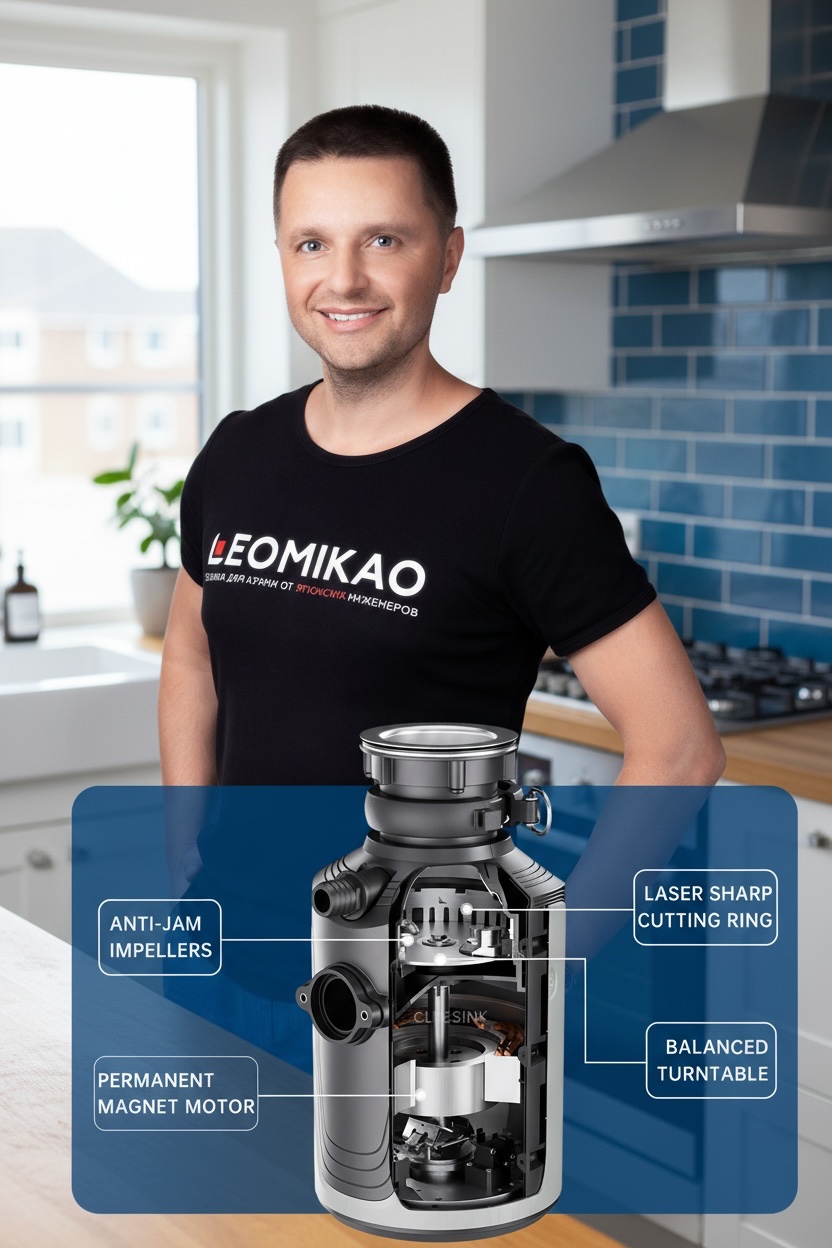
How it works. This is an evolution of the DC motor: instead of mechanical brushes, an electronic controller handles winding commutation, and the rotor is fitted with permanent magnets.
Strengths
|
Advantage |
What This Means in Practice |
|
Highest
efficiency |
Up
to 85–90% - minimal electricity consumption |
|
Speed
control |
Electronics let you
adjust speed to the type of waste |
|
Maximum
quiet |
Virtually
silent operation |
|
Durability |
The absence of brushes
brings its lifespan close to that of AC motors |
|
Compactness |
Small footprint with
strong power |
Weaknesses
- Complex and expensive electronics - the controller is vulnerable to voltage spikes, and replacing the board can
cost half the price of a new unit;
- Sensitivity to moisture - electronic components don't handle condensation well;
- High cost - these models are
40–70% more expensive than AC-motor equivalents;
- Limited repairability - not every service center has the necessary components.
Ready to
Choose a Reliable Disposer for Your Kitchen?
An induction motor, resilience to voltage fluctuations, and a lifespan measured in decades - it's all already built into LEOMIKAO models. Choose an appliance that truly works long and without surprises.
Browse LEOMIKAO food waste disposers
Want to dig deeper into which disposer suits your
needs - by chamber volume, power, or mounting type? Read our full model
comparison: